
 4 days
4-Day Marrakech to Sahara Round Trip
A balanced loop from Marrakech to the Merzouga dunes and back, with a camel trek, a desert camp night and a different route home.
Contact us for a priceView details
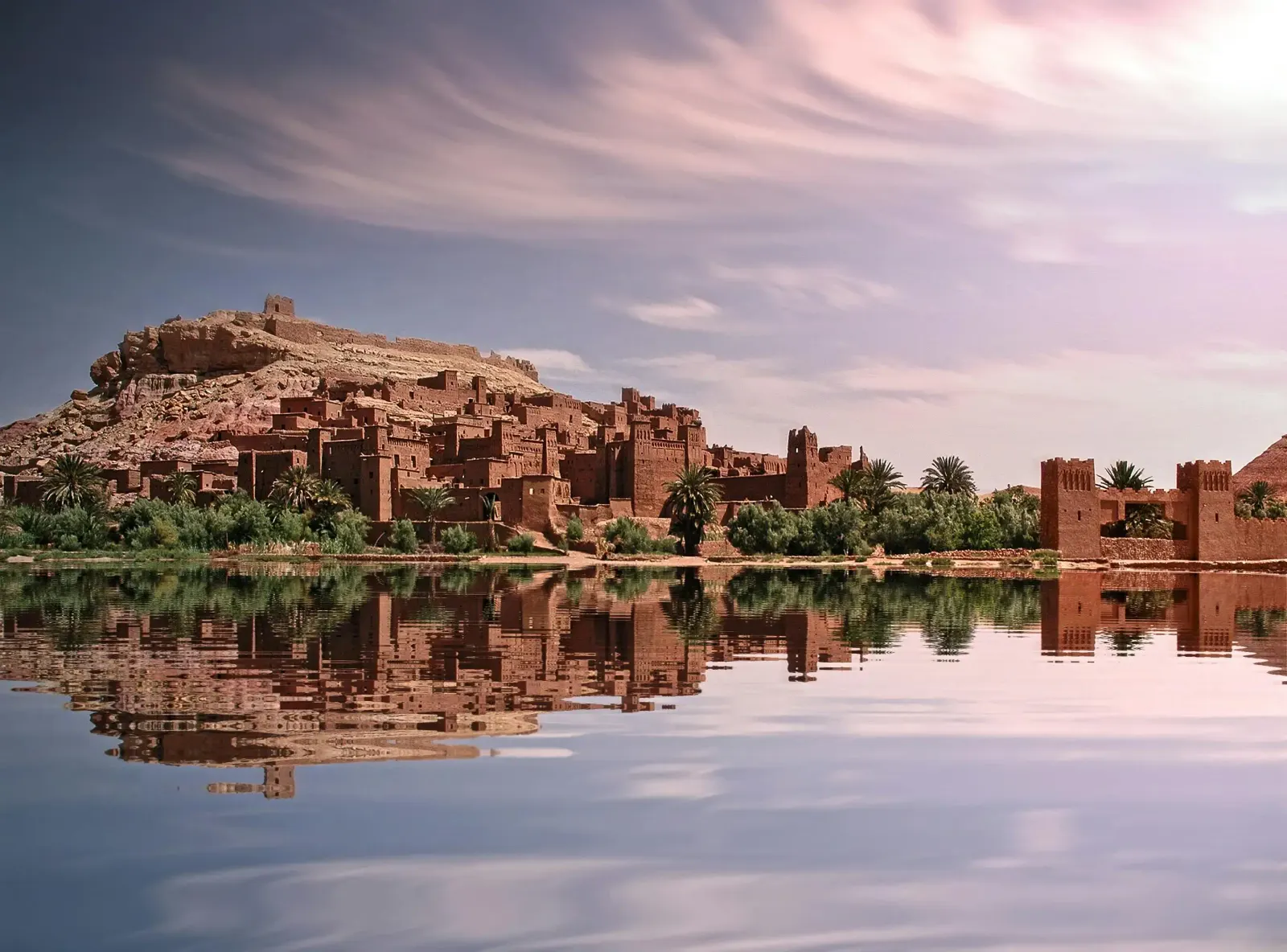
This tour covers the same essential sights as a shorter Sahara trip, but with breathing space. By sleeping at Ait Ben Haddou and keeping Day 2 short, you have time to walk among palm groves in Skoura, explore the Rose Valley and arrive in the Dades rested. The desert night and the return through N’Kob and the Draa Valley complete a full picture of Morocco’s south.
Marrakech → Tizi n’Tichka → Ait Ben Haddou → Ouarzazate → Skoura → Rose Valley → Dades → Todra → Merzouga → Alnif → N’Kob → Agdz → Ouarzazate → Marrakech
Best for: Couples, photographers and first-time visitors who prefer shorter driving days and time to explore on foot.
Driving times are approximate and exclude long stops; they vary with weather, roads and traffic.
Leaving Marrakech at a relaxed hour, we climb into the High Atlas on the N9, pausing at viewpoints and perhaps an argan oil cooperative. The road reaches 2,260 m at the Tizi n’Tichka pass before descending to the arid south side. Instead of rushing on, you spend the night at Ait Ben Haddou. Arriving in the afternoon, you can explore the ksar with a local guide when the light turns warm and the crowds thin out, then climb to the old granary for views over the Ounila valley. Many guesthouses here have terraces facing the ksar, ideal for watching sunset.
A short driving day leaves time for discovery. We pass through Ouarzazate, with an optional visit to the Taourirt Kasbah, then turn into the Skoura palm grove, where a network of paths links old kasbahs including the restored Kasbah Amridil. Continuing east, we reach Kelaat M’Gouna, the centre of the Rose Valley; in spring the hedges of Damask roses bloom and the town is busy with rose-water production. A short detour into the valley shows terraced fields and villages. We arrive in the Dades Valley in the afternoon with time to walk among the eroded ‘monkey finger’ rocks before dinner.
We head first to Tinghir and the Todra Gorge for a walk between its sheer walls, which are popular with rock climbers. After lunch the road crosses the open plateau towards Erfoud and the Tafilalet, with a possible stop to look at the old khettara underground irrigation channels. By late afternoon we reach Merzouga. You transfer to a camel for a sunset ride of around 1–1.5 hours into Erg Chebbi, where dunes rise more than 100 m. Dinner is served at camp, and the evening is yours for music, conversation or quietly watching the sky.
Climb a dune for sunrise, then ride back to Merzouga for breakfast and a shower. We pass through Rissani, where the market and the old ksour reflect centuries of trans-Saharan trade, and head west through Alnif, known for trilobite fossils. The road skirts the volcanic Jbel Saghro massif and passes quiet villages before N’Kob, which has dozens of kasbahs. In the late afternoon we arrive in Agdz in the Draa Valley, a long ribbon of palms along the river. Overnight is usually in a kasbah guesthouse among the gardens.
If you wish, start with an early walk in the Agdz palm grove or a visit to the Caid’s kasbah, then cross the Tizi n’Tinififft pass to Ouarzazate. From here the familiar road climbs back over the High Atlas via the Tizi n’Tichka. We stop for lunch in a mountain village and take breaks at viewpoints, arriving in Marrakech in the late afternoon. The total distance is similar to the outward route but split differently, so although this is a full day it should not feel rushed. We drop you at your accommodation or at the nearest access point to your riad.
We confirm these details in your written quote:
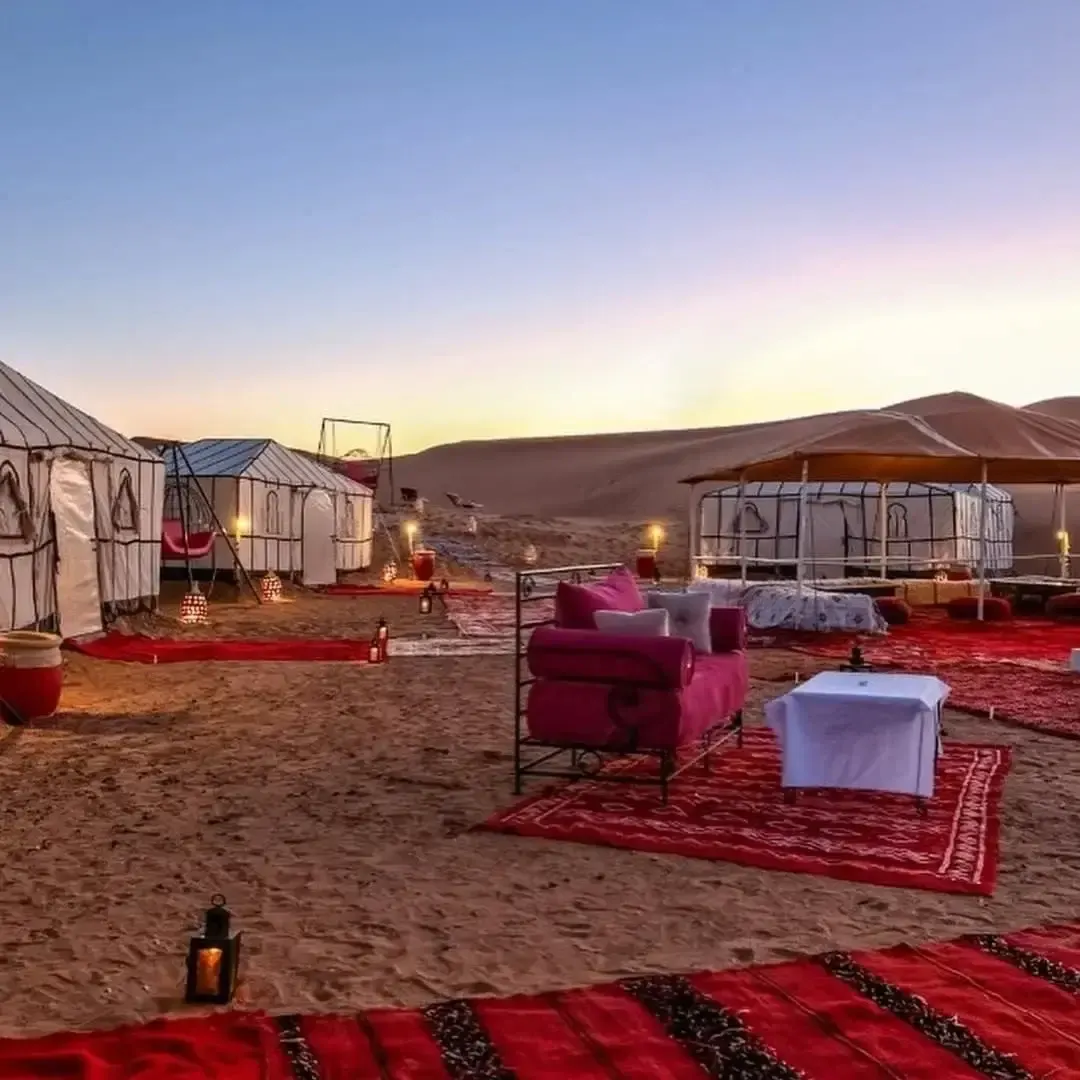
Every night is booked in the comfort level you choose at booking. Budget means clean, simple guesthouses, auberges and family-run riads, some with shared or basic facilities. Standard means well-located mid-range hotels, riads and kasbah guesthouses with private bathrooms. Luxury means boutique riads, characterful kasbah hotels and premium properties. In the Sahara the same logic applies to the camp: a budget camp has simple tents and often shared washing facilities; a standard camp usually offers private tents, many with en-suite toilet and shower; a luxury camp has larger, furnished tents with en-suite bathrooms, more space and a more refined dinner. Exact properties are confirmed in writing before you travel and depend on availability. Ait Ben Haddou and Agdz both have atmospheric earthen-walled guesthouses at budget and standard levels, with a smaller choice of luxury properties.
On private departures you travel in an air-conditioned vehicle (typically a minivan or 4x4, depending on group size) with an English- or French-speaking driver who knows the route well. Breakfast and dinner are normally included on touring nights as part of the typical plan; lunches are usually taken at local restaurants of your choice along the way and paid locally. Vegetarian and other dietary needs can usually be catered for if mentioned at booking.
The Tizi n’Tichka pass climbs to 2,260 m on a well-surfaced but winding road with many hairpin bends; if you are prone to travel sickness, sit near the front and bring medication. Days 4 and 5 are 5–6 hours of driving plus stops. Camel rides are gentle but not suitable for everyone: they are not recommended during pregnancy or for people with back, hip or serious joint problems, and riders above roughly 100–110 kg should tell us in advance (limits are set by the camel handlers — to be confirmed). Walking alongside the camels is always an option. Desert temperatures swing widely: summer afternoons can exceed 40 °C and winter nights can drop close to freezing, so pack layers. Medina streets, kasbah stairs and soft sand are difficult for wheelchair users and people with limited mobility; tell us your needs and we will advise honestly what can be adapted.
Contact us for a price. Every trip is priced for your dates, group size, tour type and accommodation level. Send us your plan on WhatsApp or by email and we will send you the price.
[TO CONFIRM: payment method (e.g. bank transfer), deposit amount and balance deadline]. A booking is confirmed only after we confirm availability and payment arrangements in writing. We never ask for card details on this website.
[TO CONFIRM: cancellation windows and refund conditions]. See our Cancellation Policy. Read the policy, our booking terms and the Sahara tour FAQs.
The Damask roses usually bloom in spring, often around April to May, and the local rose festival is held around then. Exact dates vary each year.
Staying at the ksar lets you see it in the evening and early morning when it is quiet and the light is at its best.
Yes, the route can be adapted so you leave Merzouga for Fes on Day 4. Merzouga to Fes is about 7–8 hours via Midelt and Ifrane.
4 daysA balanced loop from Marrakech to the Merzouga dunes and back, with a camel trek, a desert camp night and a different route home.
 6 days
Kasbah hotels, a palm-grove retreat in Skoura and two nights in a luxury Erg Chebbi camp – the Sahara at an unhurried, refined pace.
 7 days
A week linking Marrakech, the Sahara and Fes, with guided medina tours, a desert camp and Roman Volubilis on the way out.