
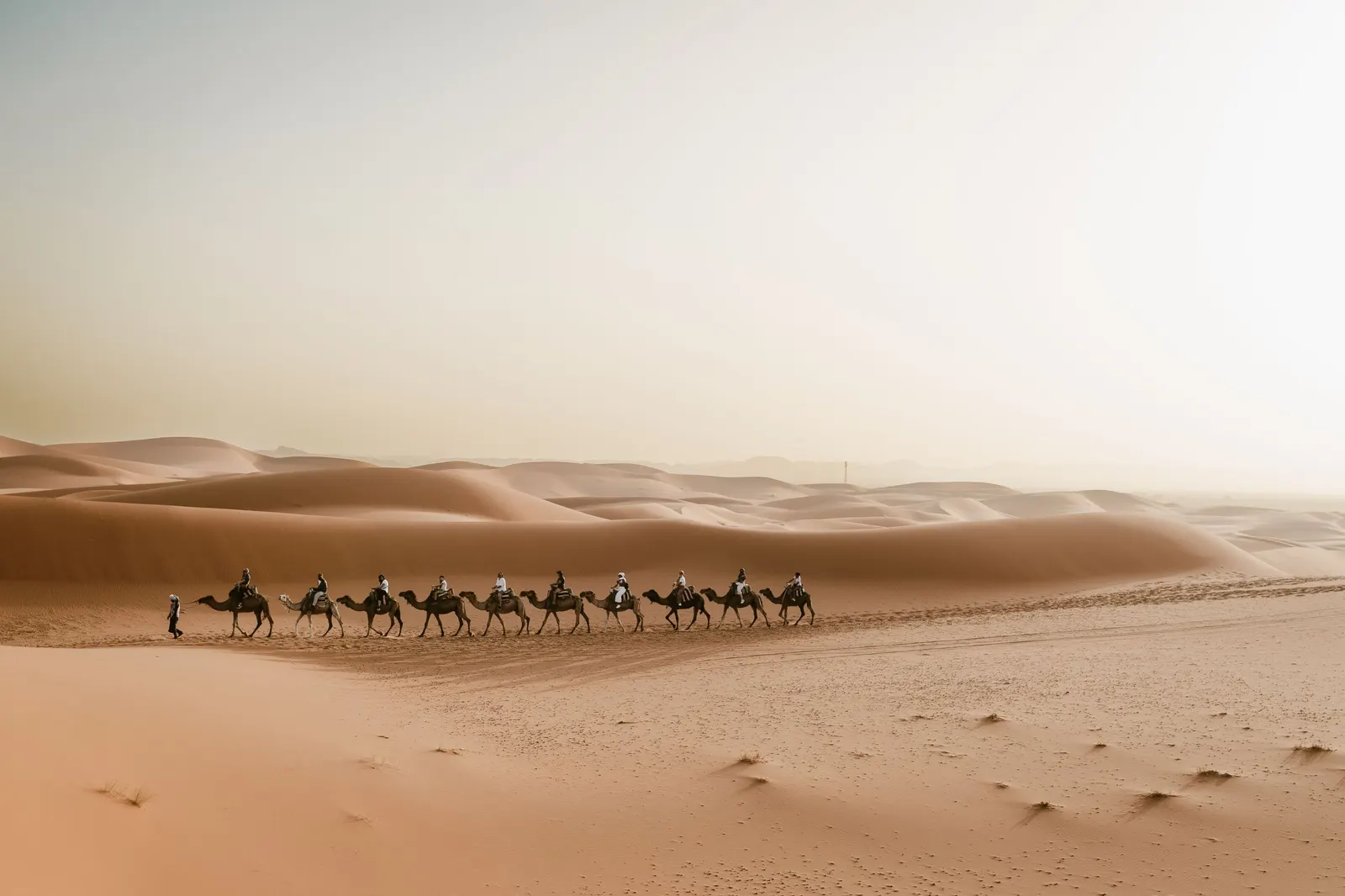
 14 days
14-Day Complete Morocco Tour
Two weeks covering the imperial cities, Chefchaouen, the Sahara, the Draa Valley, Marrakech and the Atlantic coast at Essaouira.
Contact us for a priceView details
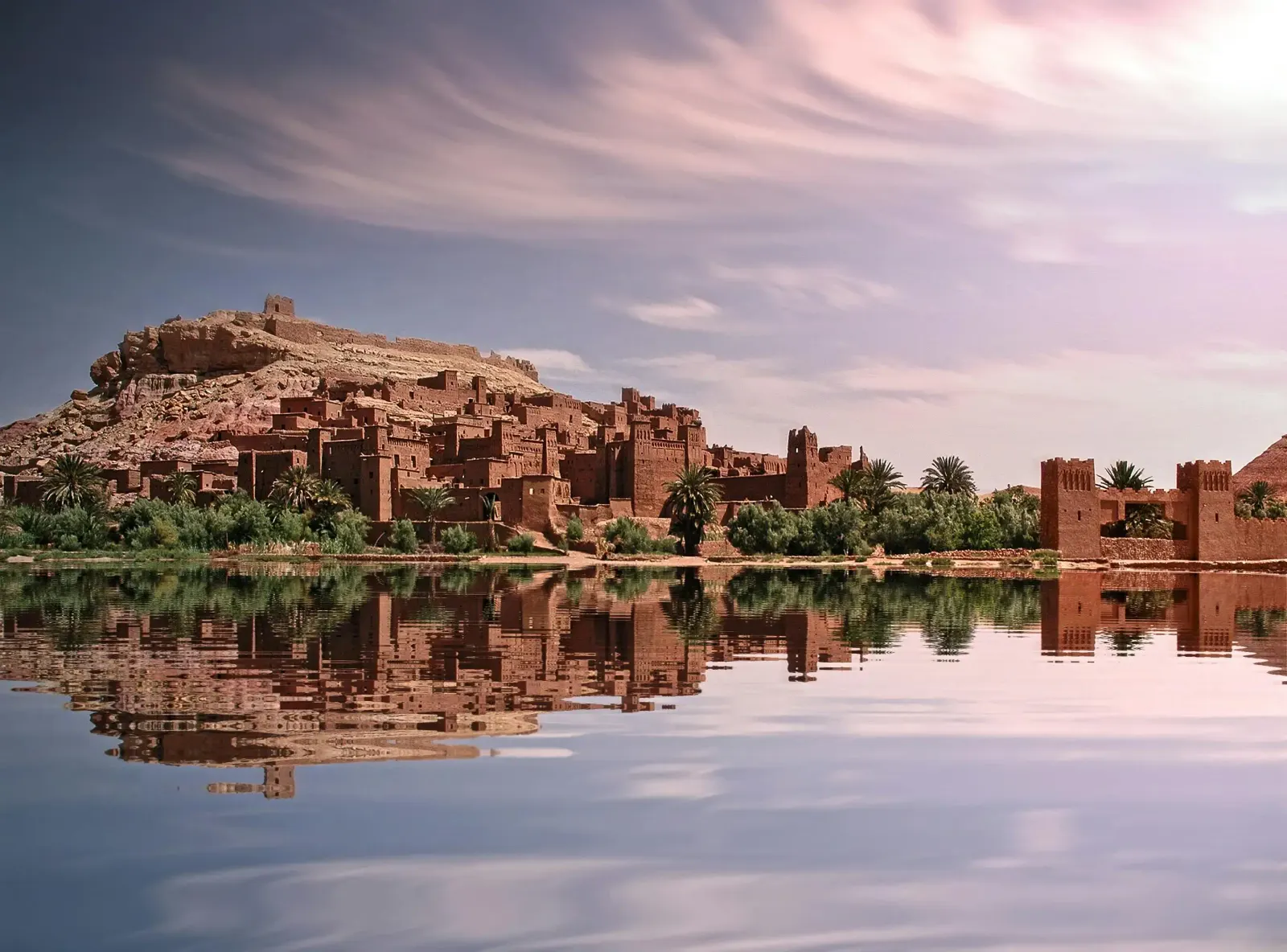
With three weeks you can see Morocco in real depth and still travel slowly. Most driving days on this route are well under five hours, leaving time to walk in palm groves, sit in village cafés and get to know the people behind the places. From the white walls of Asilah to the dunes of Erg Chebbi, the kasbahs of the Draa and the Atlantic at Essaouira, it is the fullest journey we offer.
Tangier → Asilah → Chefchaouen → Volubilis → Meknes → Fes → Ifrane → Azrou → Midelt → Merzouga → Todra → Dades → Skoura → Ouarzazate → Zagora → Ait Ben Haddou → Telouet → Imlil → Marrakech → Essaouira → Agadir → Taroudant → Casablanca
Best for: Travellers with three weeks who want to see the whole of Morocco slowly, including the Middle Atlas, the Draa Valley and the south-west.
Driving times are approximate and exclude long stops; they vary with weather, roads and traffic.
We welcome you at Tangier’s airport, ferry port or train station and take you to your accommodation. Depending on your arrival time, we can drive out to Cap Spartel and the Caves of Hercules, where the Atlantic meets the Mediterranean. In the evening you might walk up through the medina to the kasbah for a view across the Strait of Gibraltar, or take a mint tea at the old Café Hafa on the cliffs. Tangier has long attracted writers and artists, and its mix of influences is a fitting start to a long journey.
We drive about 45 minutes down the Atlantic coast to Asilah, a small fortified town whose whitewashed medina is decorated with murals painted during its annual arts festival. Walk the ramparts above the sea and have lunch in town. In the afternoon we head inland, through farmland and into the Rif Mountains, to Chefchaouen. You arrive in time to settle into your riad and explore the first of the blue-washed lanes before dinner. The pace today is relaxed, with the longest stretch about two and a half hours.
A free day in Chefchaouen. Early morning is the best time to wander the upper medina and photograph its blue doors and stairways. You could visit the kasbah museum, browse for wool blankets and local goat’s cheese, or walk up to the Spanish Mosque at sunset. For a more active outing, a guided walk to the Akchour waterfalls and God’s Bridge in the Talassemtane National Park can be arranged on request; the trail is uneven and can be slippery, so wear good shoes.
Leaving the Rif, we drive south through rolling hills to Volubilis, where the remains of a Roman city — villas with mosaics, a basilica and a triumphal arch — stand among olive groves. We continue to Meknes, the imperial city of Moulay Ismail, to see Bab Mansour and the El Hedim square, with time for a short walk in the medina. In the late afternoon we drive about an hour to Fes, where you check into your riad for two nights.
A local guide leads you through Fes el-Bali, a vast medina where life continues much as it has for centuries. You visit the Bou Inania and Al Attarine madrasas, the Nejjarine fountain, the exterior of Al Quaraouiyine and the Chouara tanneries, seen from a terrace above. Craft workshops line the lanes, from copper beaters to silk weavers. Outside the walls we can include the royal palace gates, the Mellah and the Merinid Tombs. The afternoon is free; a cooking class or hammam can be arranged on request.
Rather than driving to the Sahara in one long day, we break the journey in the Middle Atlas. We climb to Ifrane, a neat mountain town of sloping roofs and gardens, then enter the cedar forest near Azrou, where you can walk among ancient trees and often see Barbary macaques (please do not feed them). Lakes and high pastures, used by shepherds in summer, line the road south. We arrive in Midelt, beneath the Jbel Ayachi massif, in the afternoon. Midelt is known for its apple orchards and for fossils and minerals from the surrounding hills.
We cross the Tizi n’Talghemt pass and descend to the Ziz Valley, where the river has carved deep gorges lined with palm groves and earthen villages — a classic viewpoint stop. Passing Errachidia and Erfoud, we reach Merzouga in the late afternoon. Leaving your main luggage behind, you ride a camel for around 1–1.5 hours into the Erg Chebbi dunes as the sun sets. At camp you are welcomed with tea, followed by dinner and an evening by the fire.
After sunrise in the dunes and breakfast, we spend a relaxed day around Erg Chebbi. In Khamlia, a village with Gnawa roots, musicians often play for visitors in return for a contribution. In Rissani you can explore the market — busiest on market days — and the ksar of the old Tafilalet. The afternoon is free for sandboarding, a guided dune walk or an optional quad, buggy or 4x4 excursion in designated areas. Tonight you sleep in an auberge or hotel at the edge of the dunes, or a second camp night on request; a third night in Merzouga can also be added.
We head west across the stony hamada, passing lines of old khettara wells, to Tinghir. At the Todra Gorge you walk between limestone walls rising around 300 m. After lunch, the road follows oasis villages to Boumalne Dades and up into the Dades Valley, where we arrive in the late afternoon. Dinner and overnight are at a guesthouse or hotel with views over the valley. If time allows, we drive up to the famous zigzag road in the gorge for the view. Tomorrow you return here on foot with a local guide, so today keeps the walking light.
In the morning a local guide leads a walk through the Dades Gorge’s eroded red rock formations and side canyons, returning through fields and villages. Afterwards we drive west along the valley of kasbahs to Kelaat M’Gouna, centre of the rose industry, where you can visit a rose-water cooperative. By mid-afternoon we reach the Skoura oasis. Staying overnight in a kasbah guesthouse here lets you walk among the palms in the evening light and visit the restored Kasbah Amridil. Lunch can be taken in the oasis.
We pass through Ouarzazate, with an optional stop at the Taourirt Kasbah, and head south over the Tizi n’Tinififft pass. The road descends into the Draa Valley at Agdz, beneath the striking rock wall of Jbel Kissane, and follows a long ribbon of palm groves, kasbahs and ksour along the river to Zagora. In the late afternoon you can walk in the palm grove or climb Jbel Zagora for the view. Zagora is not a large-dune area, but its oasis landscape is among the most beautiful in the south.
Early in the morning we can make a short detour south to Tamegroute (about 30 minutes), known for its green-glazed pottery workshops and the old Koranic library (opening to be confirmed). We then drive north up the Draa Valley, stopping at viewpoints and villages, and back over the Tizi n’Tinififft to Ouarzazate. In the afternoon we reach Ait Ben Haddou, where you have time to explore the ksar as the day visitors leave and watch sunset from your guesthouse. Lunch is usually in Agdz or Ouarzazate.
We take the scenic Ounila Valley road north to Telouet, passing red-earth villages and terraced fields, and visit the Glaoui kasbah with its decorated reception rooms. Rejoining the main road near the Tizi n’Tichka pass at 2,260 m, we descend the High Atlas towards Marrakech, then turn south through Asni to the mountain village of Imlil at about 1,740 m. Your guesthouse here faces the Toubkal massif. This is one of the longer days of the second half, but with plenty to see along the way.
With a local mountain guide, you walk through the valleys around Imlil, linking Amazigh villages such as Aroumd and Tamatert by mule paths and irrigation channels, with views of Jbel Toubkal. Lunch is usually taken with a local family or at a village guesthouse (subject to arrangement). The route is chosen for your fitness and can be shortened or lengthened. In the afternoon, return to your guesthouse to relax on the terrace as the light changes on the peaks. The Toubkal summit itself needs two extra days and is not included, but can be arranged on request.
After a final mountain breakfast, we drive down through Asni and the Moulay Brahim gorge to Marrakech, arriving before lunch. The afternoon is free to settle into your riad and begin exploring at your own pace. Many travellers head first for the Majorelle Garden or the souks, and then to Jemaa el-Fna in the evening, when the square fills with food stalls, musicians and storytellers. Your riad can usually store luggage if you arrive before check-in time. This short drive makes a gentle transition from the quiet of the mountains back to city life.
A local guide introduces you to the city: the Koutoubia Mosque (exterior), the Bahia Palace, the Saadian Tombs, the Ben Youssef area and the souks, where every lane has its own trade. In the afternoon you might relax in a hammam, visit a museum or simply enjoy a rooftop terrace. A cooking class can be arranged on request. After two weeks on the road, this is a good moment to slow down before heading to the coast. Exact sites depend on opening hours and your interests, and shopping with the guide is always optional.
We drive west across the plains to the Atlantic, through argan country where you can visit a women’s argan oil cooperative. Essaouira’s fresh sea air is a welcome contrast. In the afternoon, explore the ramparts of the Skala with their old cannons, the fishing harbour full of blue boats and the relaxed, UNESCO-listed medina with its woodworkers and galleries. Eat grilled fish at the port in the evening. The coast here is usually breezy and fresh, which makes afternoon walks comfortable even in the warmer months.
A free day by the sea. Walk the long beach, try a kitesurfing or windsurfing lesson with a local school (on request), or take a horse or camel ride along the sand. The medina is easy to explore on foot, and the music, galleries and cafés give the town a creative, unhurried feel. Essaouira is often windy and cooler than inland Morocco, so bring a light jacket even in summer. In the evening, watch the sun go down over the Atlantic from the Skala ramparts.
We follow the coast road south past argan forests and fishing villages, with stops at viewpoints over the Atlantic. In Agadir, a modern resort rebuilt after the 1960 earthquake, we can visit the restored hilltop kasbah (Agadir Oufella) for its view over the bay and have lunch by the sea. In the afternoon we drive inland about an hour and a half to Taroudant, a market town enclosed by remarkably complete ochre ramparts, sometimes called ‘little Marrakech’. Overnight in a riad or hotel in or near the walls.
Spend the early morning exploring Taroudant’s souks and ramparts, perhaps by calèche (horse-drawn carriage), before starting the drive north. The route returns towards Agadir and then follows the motorway through the Anti-Atlas foothills and the plains of the Chaouia to Casablanca. It is a long day in the vehicle, with regular breaks, but it positions you for an easy departure. We arrive in the late afternoon and you can stroll along the Corniche or visit the art deco buildings of the city centre.
On your final morning, if your flight time allows, we visit the Hassan II Mosque, built partly over the Atlantic, with one of the tallest minarets in the world. Guided interior tours run at set times outside prayer hours (to be confirmed for your date). Afterwards we transfer you to Casablanca Mohammed V airport, about 45 minutes away. If you have an early flight, the mosque visit can be moved to the previous afternoon where possible. This is the end of a long and, we hope, memorable journey.
We confirm these details in your written quote:
Every night is booked in the comfort level you choose at booking. Budget means clean, simple guesthouses, auberges and family-run riads, some with shared or basic facilities. Standard means well-located mid-range hotels, riads and kasbah guesthouses with private bathrooms. Luxury means boutique riads, characterful kasbah hotels and premium properties. In the Sahara the same logic applies to the camp: a budget camp has simple tents and often shared washing facilities; a standard camp usually offers private tents, many with en-suite toilet and shower; a luxury camp has larger, furnished tents with en-suite bathrooms, more space and a more refined dinner. Exact properties are confirmed in writing before you travel and depend on availability. This route includes several characterful stops — kasbah guesthouses in Skoura, Zagora and Ait Ben Haddou, and a mountain guesthouse in Imlil — where facilities are simpler than in city hotels, even at higher comfort levels.
On private departures you travel in an air-conditioned vehicle (typically a minivan or 4x4, depending on group size) with an English- or French-speaking driver who knows the route well. For the Imlil village walk, a local mountain guide accompanies you; mules can be arranged for picnic and gear on request. Breakfast and dinner are normally included on touring nights as part of the typical plan; lunches are usually taken at local restaurants of your choice along the way and paid locally. Vegetarian and other dietary needs can usually be catered for if mentioned at booking. On city and leisure days only breakfast is included in the typical plan.
Most days involve under five hours of driving; the longest is Day 20 (Taroudant–Casablanca, about 6.5–7 hours plus stops). The Tizi n’Tichka pass climbs to 2,260 m on a well-surfaced but winding road with many hairpin bends; if you are prone to travel sickness, sit near the front and bring medication. The Telouet road is narrow in places, and Middle Atlas roads can see snow in winter. Camel rides are gentle but not suitable for everyone: they are not recommended during pregnancy or for people with back, hip or serious joint problems, and riders above roughly 100–110 kg should tell us in advance (limits are set by the camel handlers — to be confirmed). Walking alongside the camels is always an option. Quad biking, buggies and 4x4 excursions take place only in designated areas, with a safety briefing, helmet and goggles; minimum ages are set by the operator — to be confirmed (typically 16+ to drive a quad alone, younger passengers only with an adult). Sandboarding is fun but falls are common; it is not advised for people with back or neck problems or during pregnancy. The Imlil walk is at around 1,700–2,000 m on uneven paths; a reasonable level of fitness is needed, but routes are adapted. Desert temperatures swing widely: summer afternoons can exceed 40 °C and winter nights can drop close to freezing, so pack layers. Medina streets, kasbah stairs and soft sand are difficult for wheelchair users and people with limited mobility; tell us your needs and we will advise honestly what can be adapted.
Contact us for a price. Every trip is priced for your dates, group size, tour type and accommodation level. Send us your plan on WhatsApp or by email and we will send you the price.
[TO CONFIRM: payment method (e.g. bank transfer), deposit amount and balance deadline]. A booking is confirmed only after we confirm availability and payment arrangements in writing. We never ask for card details on this website.
[TO CONFIRM: cancellation windows and refund conditions]. See our Cancellation Policy. Read the policy, our booking terms and the Sahara tour FAQs.
Not at this pace. Short driving days, two-night stays and free days in Chefchaouen and Essaouira keep it comfortable. You can also shorten it by dropping sections.
Yes, by adding two days at Imlil for a guided ascent with a mountain guide. It suits fit hikers; altitude and weather conditions apply.
It splits the long Fes–Merzouga drive into two easy days and lets you enjoy the Middle Atlas cedar forests rather than rushing through them.
Yes. Ending at Agadir airport after Taroudant saves the long final drive. Tell us your flights and we will adjust the last days.
Yes, a third night can be added for more time in the dunes, optional activities or simply rest.
14 daysTwo weeks covering the imperial cities, Chefchaouen, the Sahara, the Draa Valley, Marrakech and the Atlantic coast at Essaouira.
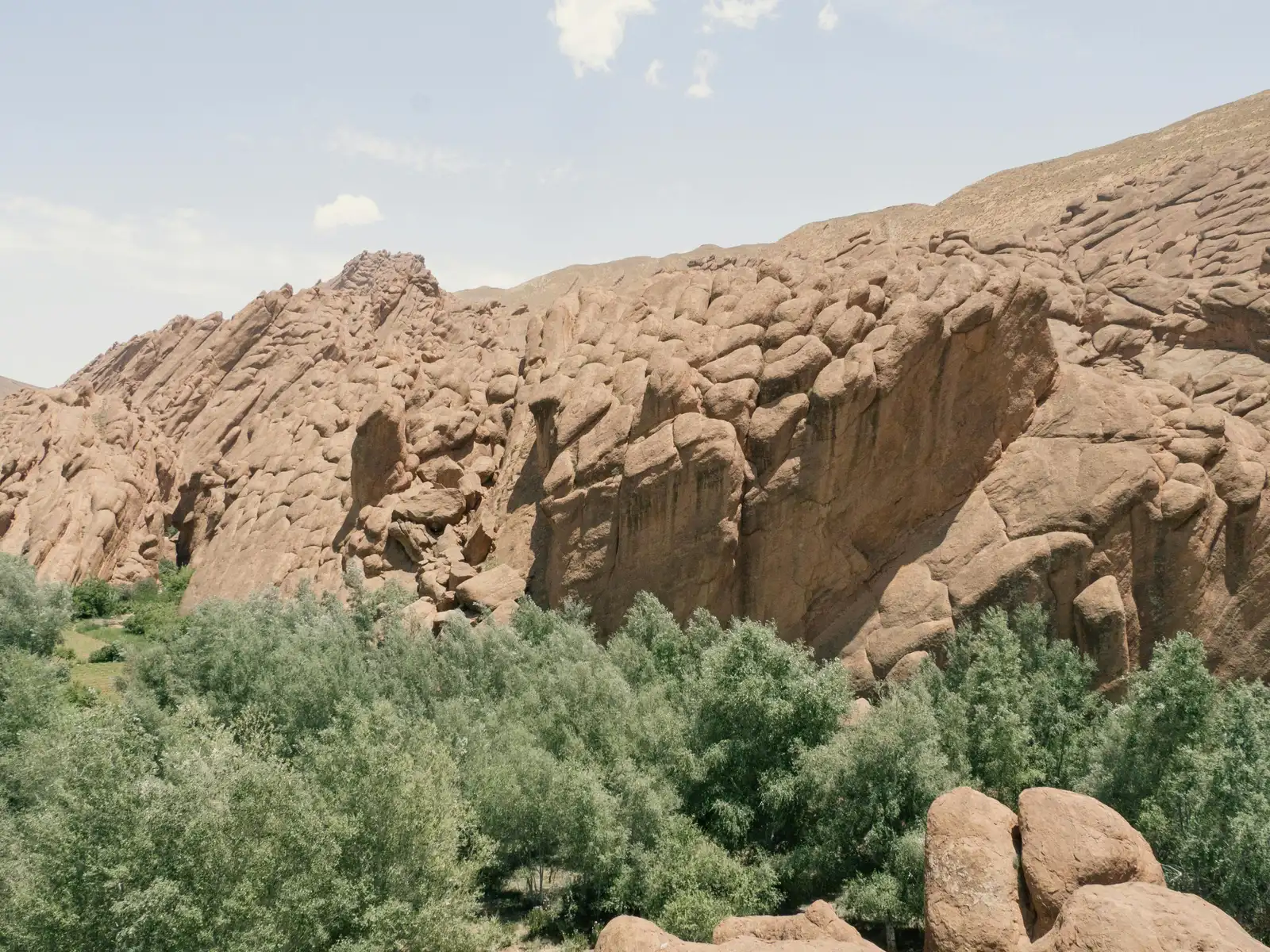 15 days
For active travellers: climb Toubkal with a mountain guide, hike gorges, spend two nights in the Sahara, then explore Fes, Chefchaouen and Essaouira.
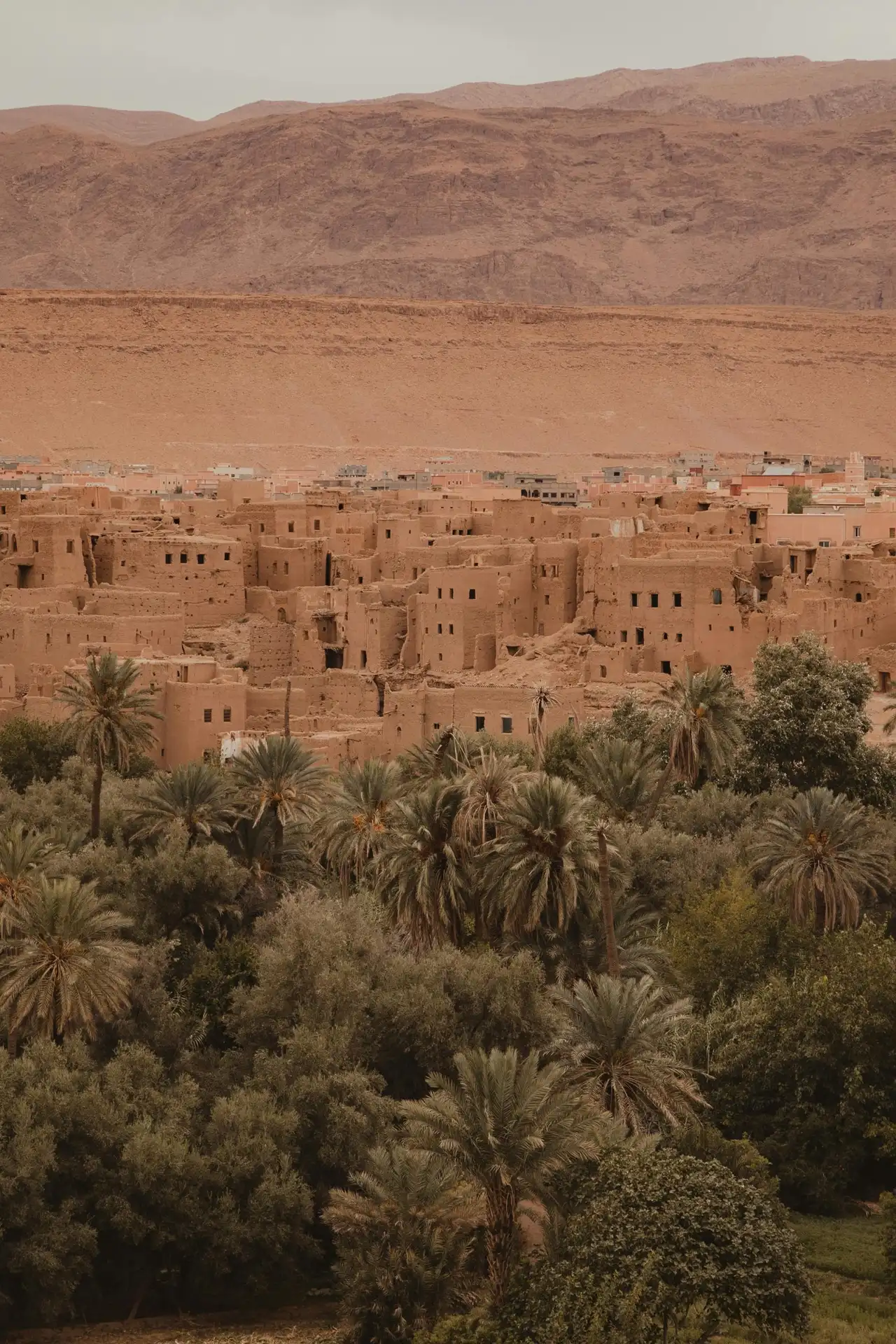 12 days
From the Strait of Gibraltar to Marrakech in twelve unhurried days, with two nights in Chefchaouen, Fes, Merzouga and Marrakech.